Swiss Journey: Observations, Reflections, and Impressions
I went to Switzerland once during the summer vacation—a truly rare and unforgettable experience. While the memory is still fresh, I’d like to jot down a few thoughts to record it.
Regarding the scenery, overall, if you don’t have the chance to go to Switzerland, traveling to Sichuan (especially western Sichuan) can serve as a decent substitute. As someone from Sichuan who’s accustomed to mountains and rivers, Switzerland’s landscapes may not strike me as particularly breathtaking.
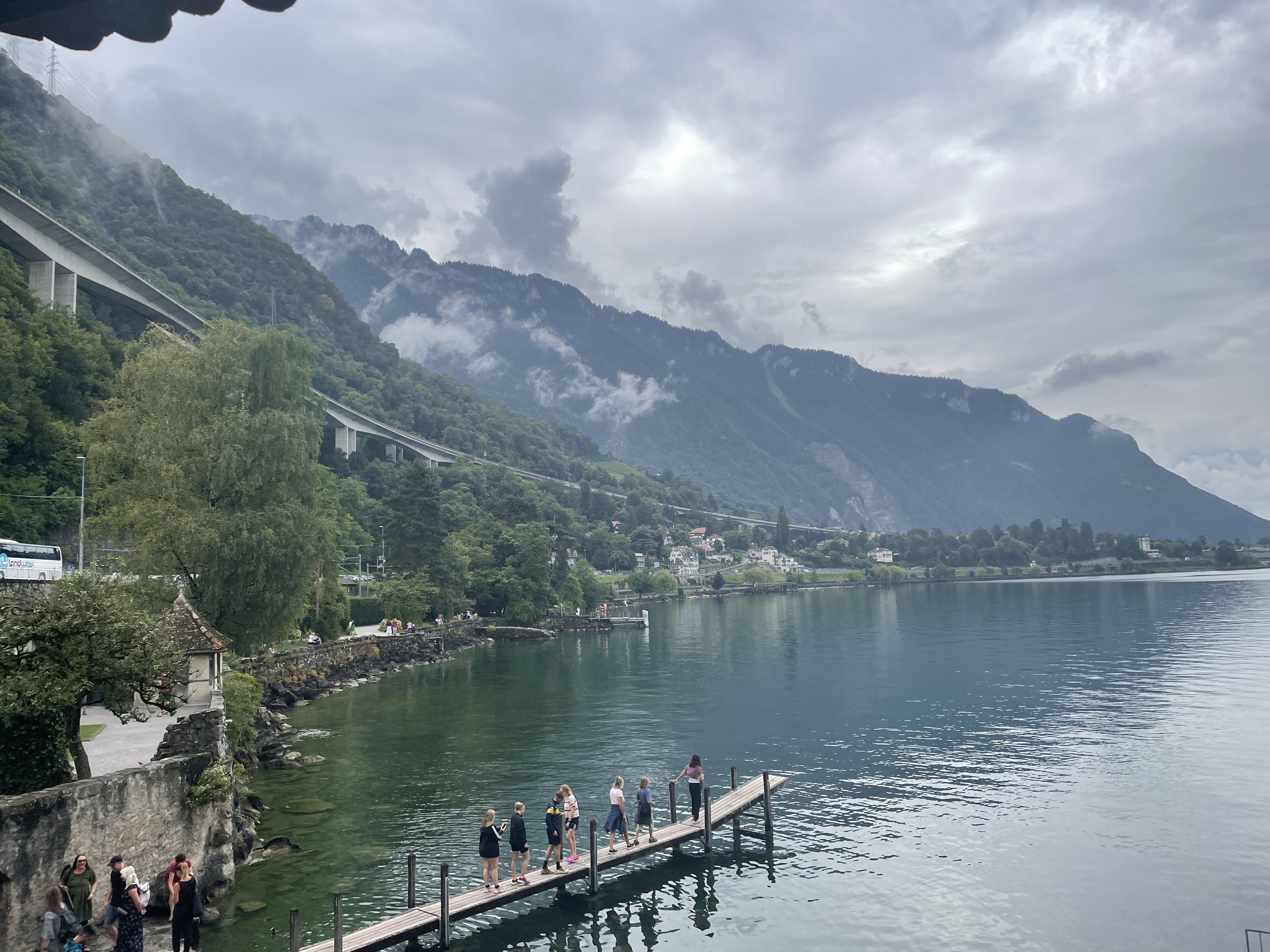 Railway near Chillon Castle, Switzerland
Ah, as an old Chinese saying goes, people always first see the mountain as just a mountain, then consider it is no longer a mountain. Whether you ever get to the point where the mountain is once again simply a mountain depends entirely on your own inner work. Even the Swiss who grow up surrounded by these peaks probably grow used to them and think, “Well, maybe it’s nothing special after all.”
In Switzerland, neither the metros nor the trains have security checks or assigned seating. If you’re only staying a few days, you can buy a Swiss Travel Pass straight from SBB (they even have a WeChat mini-program). The pass covers every form of public transport inside the country—metros, buses, boats, trains—and also gets you into the vast majority of tourist sights for free.
Single tickets, on the other hand, are tied to a specific departure: you must ride the exact train you booked, and they’re not cheap. Unlike in China, there are no ticket gates before you board; everything is on the honor system. Once you’re on, inspectors may appear at random. During my fifteen-day stay I was never checked on a city bus or tram, and on the railways only on the longer legs—but if you’re caught without a valid ticket the fine is hefty.
On my very first day, riding the airport train from Geneva to Morges, I watched a fellow passenger get nailed: he’d bought a short-hop ticket and kept riding. The inspector wrote him a fat fine on the spot.
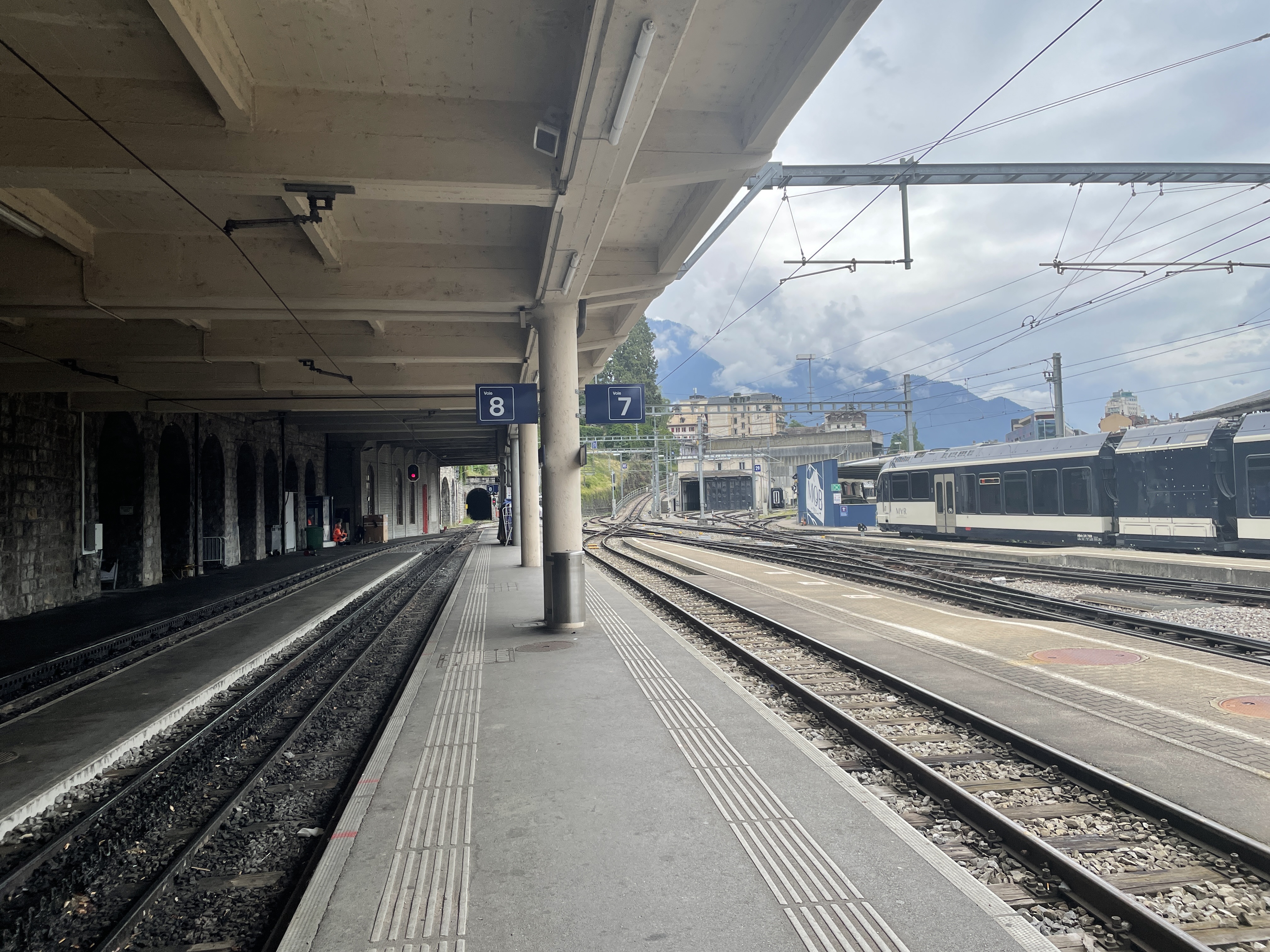 Platforms: almost bare-bones
 A little wooden chalet on the hillside, with a wide green lawn right at the doorstep. Good atmosphere.
Walking in the mountains feels cool (I mean, both the atmosphere and the temperature). It is close to what I thought the Nordic countries would be like. The wind from the peaks is cold and makes your mind feel clear and calm.
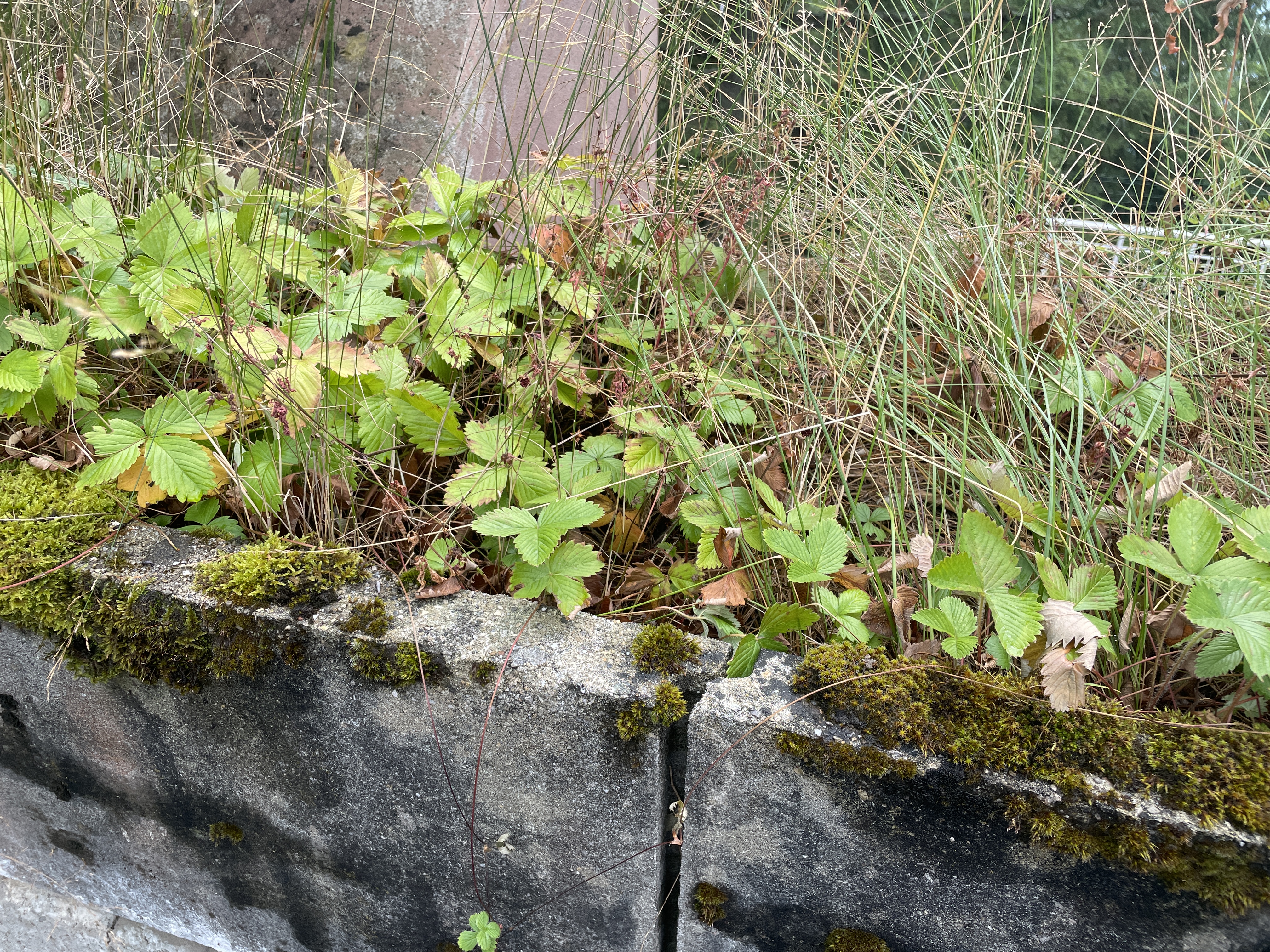 Wild strawberries
Prices in Switzerland are high. The government limits food imports and has strict animal welfare rules. The good news is that supermarkets offer many kinds of meat. Each pack carries a clear logo that shows which animal the meat comes from. Even so, Switzerland is often called a “food desert.” Even pre-marinated meat for grilling should be chosen with care; in my view the taste is not great.
Fruit and vegetables cost even more. In China I used to buy a big slice of watermelon, or even half a melon, for every lunch and dinner in the summer. In Switzerland one bite feels like a luxury. The local watermelons are small and not as sweet as the ones back home.
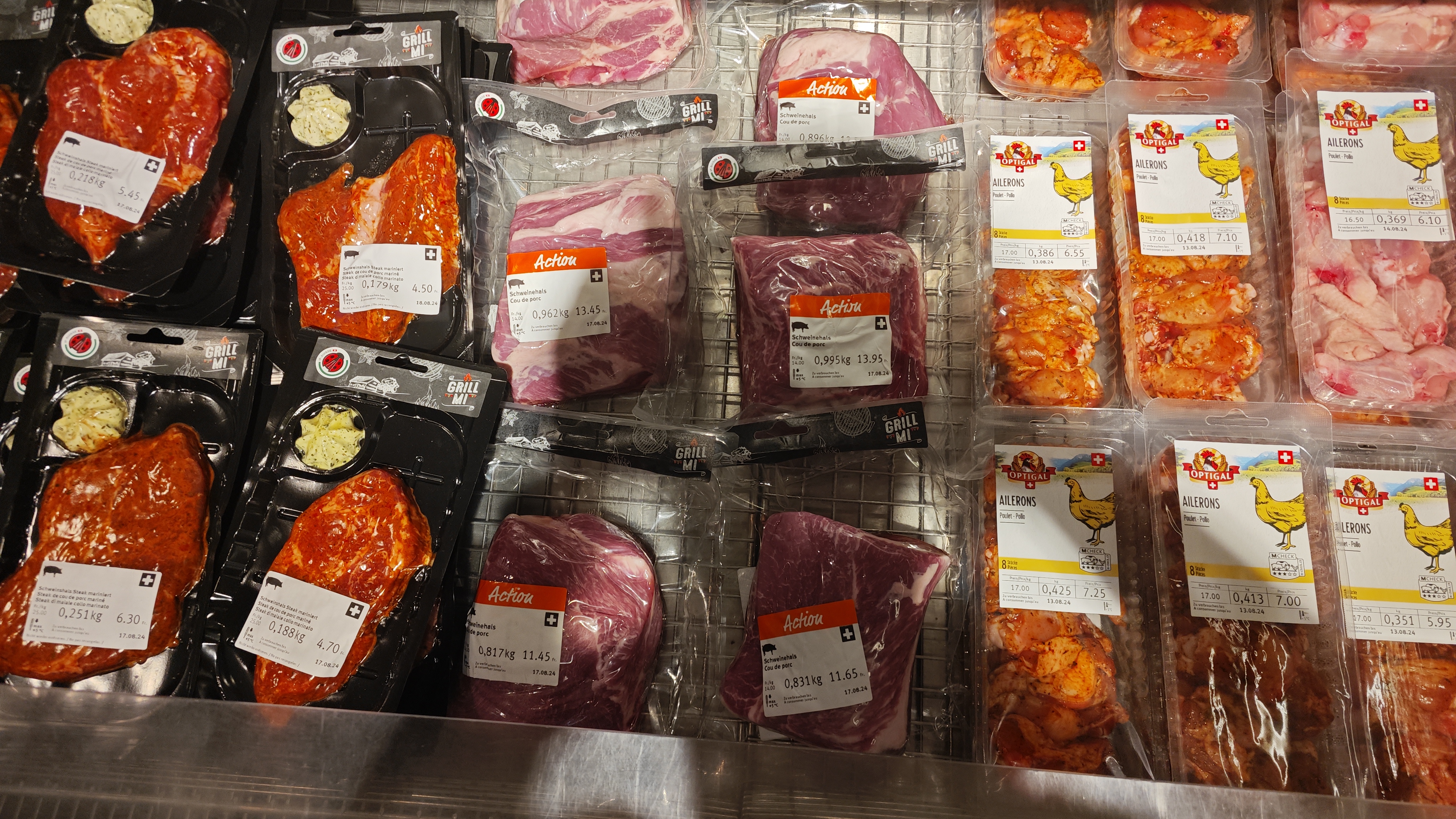 Meat
Meat
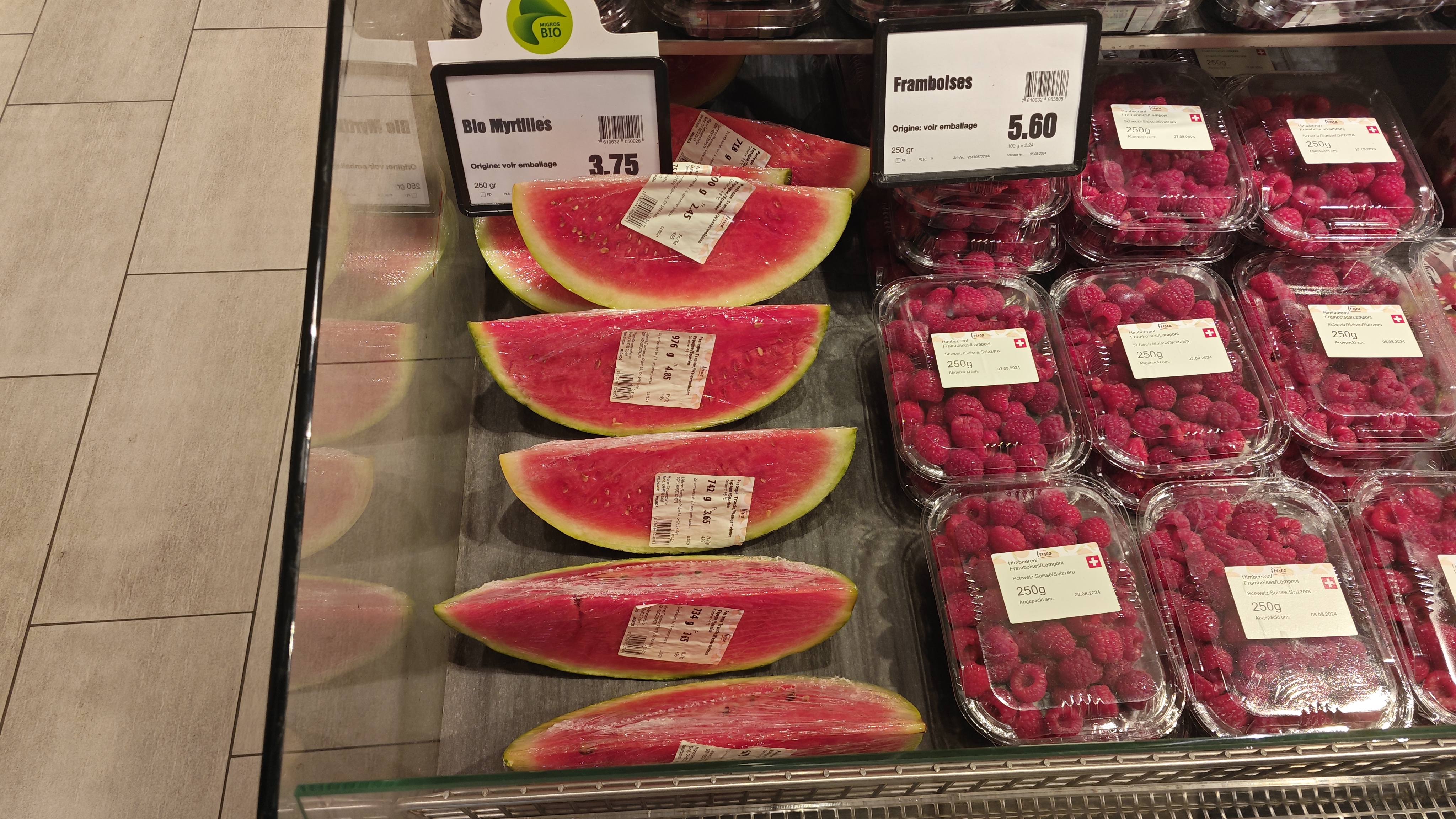 Melon
Melon
Raspberries are actually quite dry and have far less juice than they appear. They also seem to ferment very easily. When I set off in the morning, I filled my water bottle halfway with water and the rest with raspberries. By the time I returned in the evening, the mixture already had a faint smell of alcohol.
It is said that these berries are very good for your health. On my third day in Switzerland, I developed a mouth ulcer. I then ate raspberries and blueberries heavily for three days—buying one box of raspberries and two boxes of blueberries—and the ulcer actually healed.
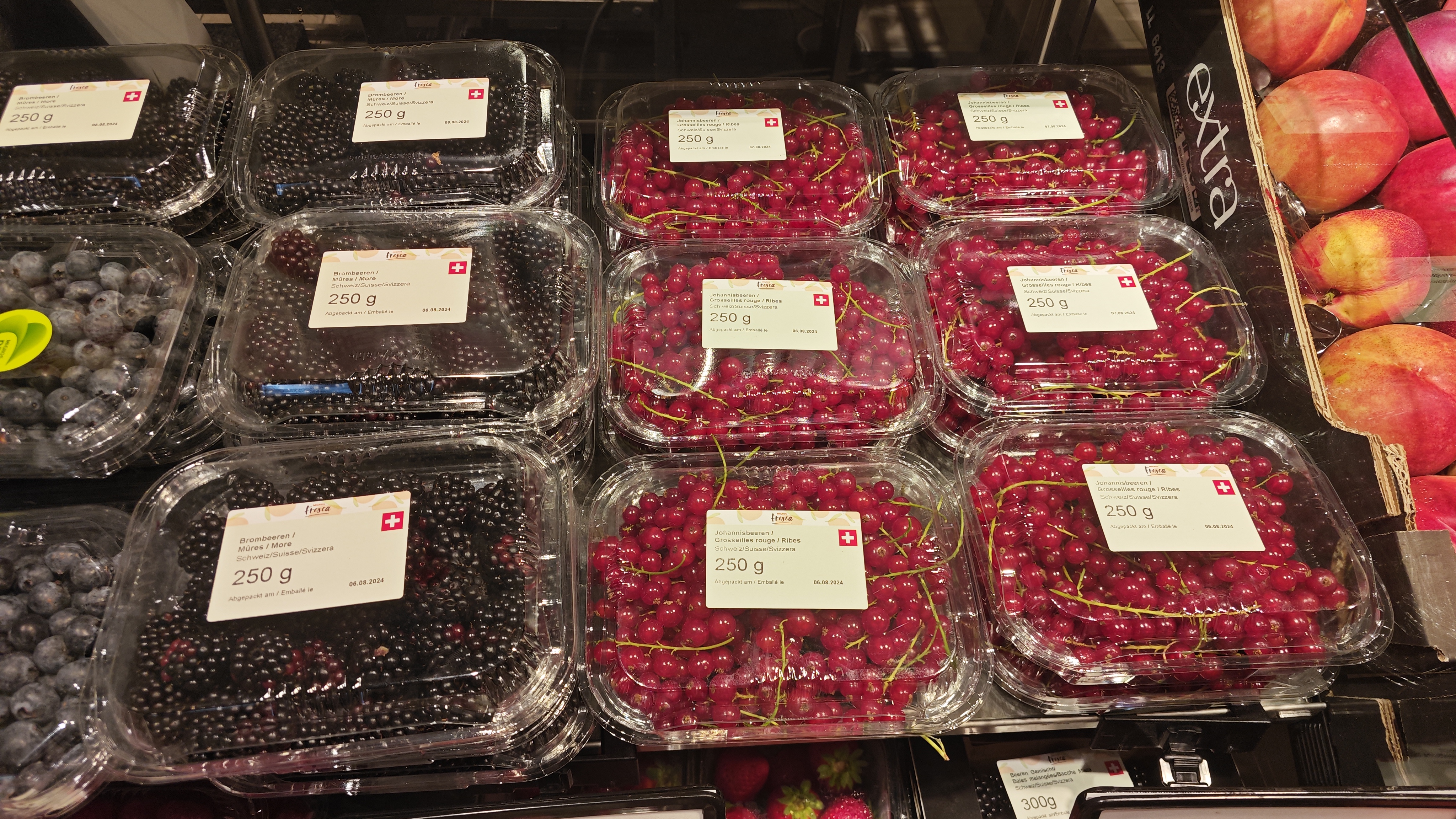 Some other fruits. The red currants on the right seem to grow in northern China as well.
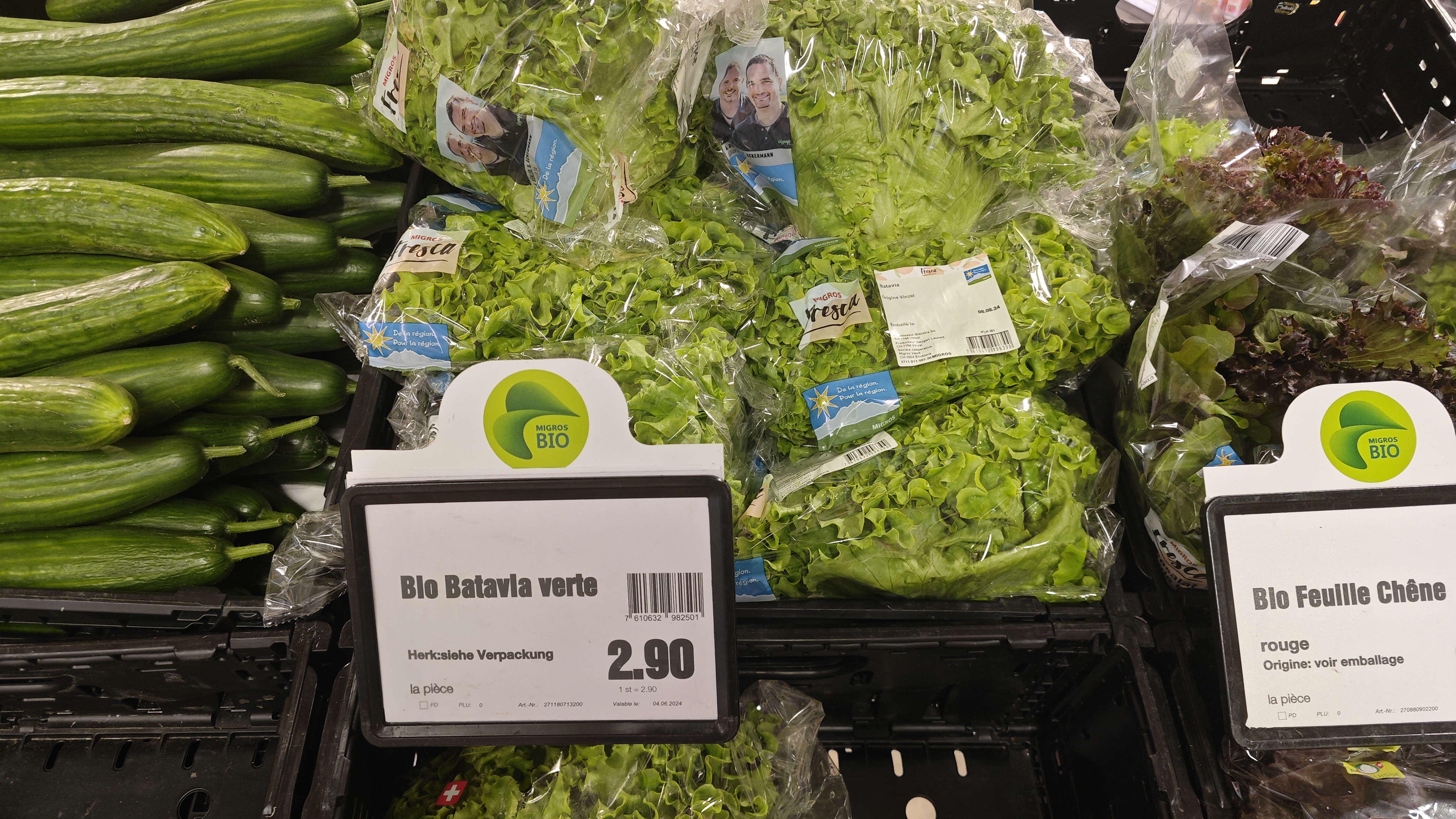 Cucumber and lettuce